
About Companio Capital
Active co-ownership in business succession within small and medium-sized enterprises
There are thousands of profitable small and medium-sized businesses in the Netherlands that are capable of achieving more than they currently do. The major private equity funds aren’t interested in them. I am.
Companio Capital invests in profitable SMEs that are too large or too complex for bank financing alone, but do not yet fit the traditional private equity model. We do not step in as a passive shareholder, but as a co-shareholder who actively contributes to the company’s next phase. This means: involvement in strategy, structure, governance, and capital discipline. Not as an advisor on the sidelines, but within the shareholder structure. We focus on companies that can become stronger than they are now: more scalable, less dependent on a single individual, and more easily transferable to a future owner.
Harm-Jan Warger
Why it works
Why Active Co-Ownership Works in Business Succession
Among Dutch SMEs, there is a large group of companies that are operationally strong but not yet organizationally ready for the next phase of ownership.
Often, these are healthy businesses with a solid customer base and an entrepreneur who has built a great deal. At the same time, however, there is often a reliance on key individuals, a limited management structure, or insufficient financial and strategic maturity to truly scale up.
That is where our role comes in.
We do not believe that capital alone makes the difference. The difference lies in active shareholding: working together with management and other shareholders to build a company that is structurally stronger than when we first invested.
Starting points
Every intervention is assessed: does this make the company demonstrably more scalable than when it entered the market?
Every intervention is assessed: does this make the company demonstrably more scalable than when it entered the market?
Every intervention is assessed: does this make the company demonstrably more scalable than when it entered the market?
Our role
What we mean by active co-ownership
For us, active co-ownership does not mean micromanaging every detail. It means taking responsibility for the areas that are critical to the company’s quality and future viability.
Specifically, this involves five key areas:
Upon boarding
Strategic positioning
Refining market selection, value proposition, and growth strategy.
First year
Organizational robustness
Strengthening the management structure and reducing reliance on specific individuals.
Continuous
Financial structure
Improving reporting, predictability, and the quality of funding.
Continuous
Capital allocation
Prioritizing investments based on long-term value rather than ad hoc needs.
Upon exit
Governance maturity
Establishing decision-making structures that will continue to function even in a subsequent ownership phase.
The criterion remains the same: is the company demonstrably more scalable and more transferable than it was at the time of acquisition?
Our Vision
What We Believe In
We believe in companies that are not only performing well but also have a solid foundation.
We believe that a change in ownership is not an end in itself, but a moment when the true quality of the company becomes apparent.
We believe that a company becomes stronger when key decisions are made explicitly: regarding strategy, mandates, investments, succession, and decision-making.
And we believe that active shareholder engagement sometimes creates more friction than passive investment, but also leads to better, more robust, and more transparent decisions.
For whom
The entrepreneurs and small and medium-sized businesses we serve
Companio is ideal for entrepreneurs and management teams who want to take their business to the next level and understand that this requires more than just capital.
We are best suited for situations where:
- The company is profitable and typically generates between €2 million and €10 million in revenue;
- Bank financing alone is not the best option;
- There is clear potential for professionalization and scaling up;
- There is, or can be formed, a management team capable of taking on responsibility;
- The primary motivation for the transfer lies in ensuring the continuity of the business, its people, and its culture.
We are definitely not the best fit for business owners who are primarily looking for peace of mind because no one will interfere anymore, or who want to transfer ownership but retain full decision-making authority.
Your role
The Role of the Business Owner in a Business Transfer
We operate on the principle of partnership, not replacement.
This means there is no standard scenario for the selling business owner. Sometimes the owner remains actively involved. Sometimes the owner phases out gradually. Sometimes the role shifts to strategic co-ownership, while the management team is given more autonomy.
The question isn't which model feels best. The question is which one will make the company stronger in the long run.
We therefore clearly define these roles and adapt them as the company evolves.
Transfer in full
You will transfer ownership of the company and step down. Companio will continue to work with the management team, which will become co-owners and carry on the business.
Phased withdrawal
You will gradually transfer responsibilities to the management team, at a pace that suits the company. Companio supports this transition.
Stay involved as a co-owner
You retain an ownership interest and remain strategically involved. Day-to-day management is handled by the management team, and decisions are made through the shareholders’ meeting.
In all scenarios, the management team remains on board and continues to build the business as co-owners. Companio’s partnership in operations and decision-making is primarily focused on them.
OUR promise
What our business succession model does and does not promise
Companio does not promise growth without strings attached, nor does it promise an exit to complete freedom.
What we do promise is a transfer with a focus on continuity.
This means a shareholder who not only brings capital but is also committed to the quality of the company. It also means that decision-making is shared, that assumptions are tested, and that capital discipline is not optional.
That is more intensive than passive ownership. But that is precisely where the value lies for us.
Transfer
Engagement
Shared decision-making
Capital discipline
Transparency
What we do and do not discuss in public
We operate in accordance with applicable regulatory and disclosure requirements. For this reason, we do not publicly disclose certain information, such as performance figures, fund-specific data, or statements regarding future results. We do this not out of convenience, but out of a commitment to professional integrity.
What we do share
How we work: the people, the roles, the shareholder structure, the way we are involved, and the decisions we make in that context.
What we do not share publicly
Return figures · Fund-specific data · Forward-looking statements
Because trust here isn't built on grand claims, but on clarity regarding responsibility.
Team
Who's behind it
Companio Capital was founded by Harm-Jan Warger. His experience as an investor and co-shareholder in small and medium-sized enterprises forms the foundation of Companio’s approach. Not only what works, but also where the challenges lie: in decision-making, in growth strategies, and in structuring ownership following a transaction.
Companio is supported by a streamlined structure for fund management, financial reporting, and administration. In addition, there is an investment committee comprising independent stakeholders, and Companio collaborates with specialized partners in legal, financial, and notarial matters.
For us, the division of roles is more important than job titles: who takes responsibility for what, where does the mandate lie, and how is decision-making organized? This should not remain implicit but must be explicitly documented.
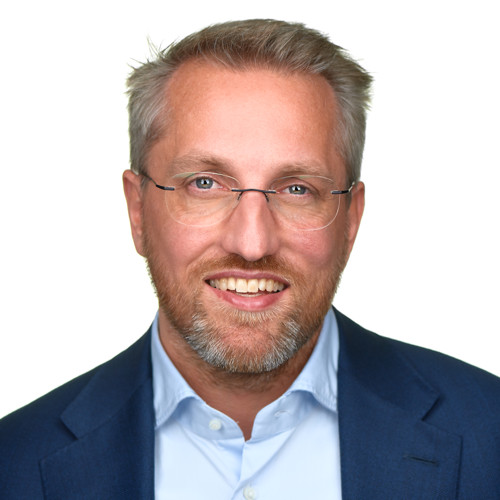
Harm-Jan Warger
Ultimately responsible for fund management and the investment strategy.

Jaap Janssen
Responsible for financial fund reporting and monitoring the companies in the portfolio.
Sanan Beks
Responsible for fund administration and contributes to reliable and up-to-date financial information
Governance
Investment Committee
Independent oversight. Meets monthly. Approval authority for new investments, divestitures, and refinancing.
Ton Moonen
Edward Gaakeer, Chartered Accountant
Marc Cloosterman
Advisors
Regional partners in the legal, financial, and notarial fields.
VWG Accountants
Fender Attorneys
Theunissen Notary
Does this approach to collaboration suit your situation?
Companio isn’t for every entrepreneur. That’s by design.
But if you’re looking for a co-investor who won’t keep their distance and who will work alongside management and shareholders to build a business that’s more scalable and easier to transfer, we’d love to meet you.